In my opening shoot for the exam, I decided to take inspiration from the artists Helene Binet and Henry Yau. Furthermore, I am going to add a twist onto the final images, by editing them in a unique way which matches the previous shoots I have completed. However, the photos themselves will be more macro-related rather than showing a vast area. I'm also going to experiment with creating more rigid photos, moving away from the original brief.
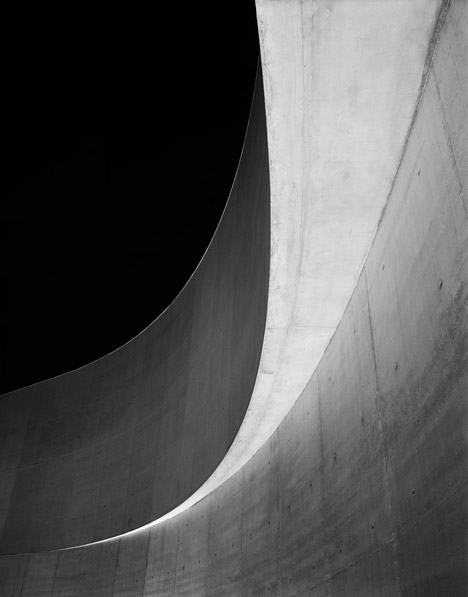

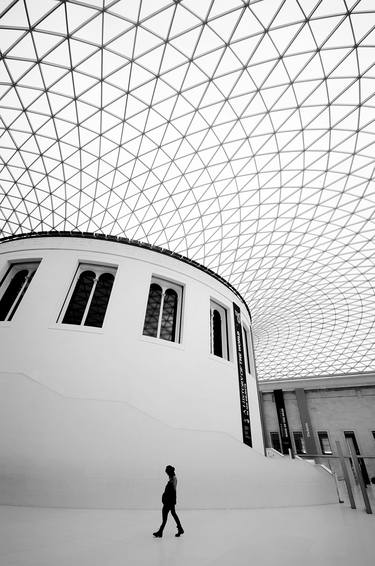
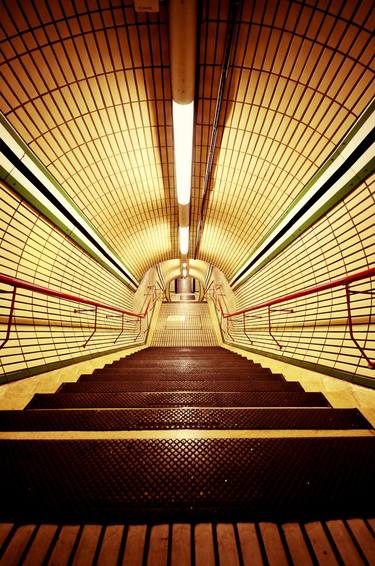
Contact Sheet

Straight Images


The photos above I believe accurately represent both the brief and what I've been trying to master through component 2. I've taken photos of urban areas and tried to find as many industrial elements as I could. I enjoy the curves and composition of each image, linking respectfully back to the original brief. Furthermore, each has its own unique element to it. However, I am quite critical to the fact that the exposure and focus settings were not up to scratch, because of using a loaned camera in replacement for my regular camera.
The first image entails a statue of old, standing alone in a grey sky. The photo was taken to create a piece that stands out significantly against the background, and this directly focuses on the single object. Furthermore, it gives a great opportunity to test out burning and dodging for the final photo.
The second and fourth photo are both from similar areas, where there hasn't been much maintenance. The photos both have great composition to each, focusing on the curves of an area while giving an abstract feeling for the rest of the area. However, I don't like the lack of contrast in the fourth one, and the exact opposite is happening in the second. Although, both issues can be rectified in Photoshop.
The final photo is of an abandoned store, where the garage door has been lowered over the front to prevent entry. It focuses on a single corner to create a feeling of contrast between the two plains, which is quite successful.
To progress further with these images, I have decided it would be good to try out experimenting with multiple different themes. The regular black and white style has become a bit regular so it would be interesting to switch the styling a bit, with burning and dodging or selective saturation. Furthermore, I could try composite imaging to fiddle around with the photos further, creating a more abstract final piece
AO2


Through the exploration of potential experimenting, I've managed to recreate a popular style in which selected colour channels are gradually moved away from the original spot, creating this "3D Glasses" effect you when wearing them. Furthermore, it creates a very aesthetically pleasing image, as it uses new ideas rather than just losing the colour. It creates a vibrant feel that captivates the viewer. Furthermore, I feel I could improve on this even more by maybe creating an Andy Warhol-style effect in the future.
AO3
 The experiments have given me a very helpful view of the future of my edits, giving me a new view on how I will edit my photos. For my final pieces in this shoot and others, I believe I might follow a similar plan of select saturation, and make sure specific points are focused on when necessary.
  To reach this goal, I've decided to edit these photos in the black and white theme, however, I will also be burning and dodging to get the desired effect appropriate for the edit. To edit the photos, I began using Camera RAW as usual. I did my normal settings (high contrast & exposure, no saturation, lots of clarity/dehaze) and opened it in Photoshop's editor. This is because I will be using the burn and dodge technique to bring out specific areas of each photo.
 To do this, I began by creating two "curves" layers, and having one a single box up and the other a single box down. Then I invert both of them (CTRL+I) and open the brush tool. Then I put the brush's main colour to white and the other to black. It is most advised that both a white brush and black brush are used, instead of just white, because it gives you quick access to erasing specific points. After this, I used the white brush on each respective curve, bringing out different areas. Using the brush on the low curve would make the area darker, and the opposite for the other curve. For example:
 If I want to shade an area behind an object, I'll set around 30% opacity white brush and use, in this instance, curves 1 and brush where I want the darker area. This will increase the exposure and contrast significantly while giving you much more freedom for where you want to darken or lighten the photo.
AO4
I believe my work has developed significantly through the unit and I have reached a point where I can successfully complete the brief without hitch. In my most recent shoots, I believe I have been influenced significantly by artists' work like Olsen, Yau, and Binet, but also a significant amount of my work has used similar ideas as Josef Sudek. However, rather than it being directly focused on composition, I'm taking his ideas of how he used to contrast and how the lighting in his images are played out. Furthermore, I also believe I should take further some of the experiments I completed in previous shoots.
The experiments throughout all my shoots have been very positive in my opinion, however, I haven't taken any of them any further. I've experimented and then not taken any of it towards my final pieces. Because of this, I think it would be a good idea to bring some of it into my final work. That's also one of the reasons I decided to use burning and dodging so much in the photos.
Final Pieces


Evaluation
To conclude, I believe this shoot to be a very modest success. Many of the photos were less than ideal to use for final images, however, I pulled through and got there in the end. The photos above all went through a good amount of editing and scrutiny to make sure that they would match the brief and look aesthetically pleasing, and the actual shoot itself was a resounding success. My only qualms would be the issues of cameras. For both of my exam shoots, I ended up using a loaned Nikon D3500 rather than my Canon 1100D. Because of this, I was less prepared for the controls of the camera, and it took quite a while to get a hang of using the user interface. In conclusion, the shoot was a positive experience, however, some efforts taken delayed the shoot.

No comments:
Post a Comment